Your vehicle is one of the most expensive investments you’ll make. Smart maintenance decisions can extend its lifespan by years and save thousands in replacement costs.
Many owners treat maintenance as optional or wait until something breaks before addressing problems. This reactive approach costs far more than proactive maintenance.
By understanding which maintenance steps extend vehicle lifespan, you can protect your investment and delay replacement by years. If you drive in Birmingham or nearby areas like Hoover, Vestavia Hills, Homewood, Mountain Brook, or Irondale, tailoring maintenance to our climate while extending vehicle lifespan is an intelligent financial strategy.
How Vehicle Life is Determined
Your vehicle’s lifespan depends on three main factors:
1. Original Quality
- Manufacturing quality
- Initial materials and workmanship
- Design and engineering
- Component durability
- Original specifications
2. Maintenance Quality
- Regular preventive maintenance
- Prompt repair of problems
- Using quality parts and fluids
- Following manufacturer schedules
- Proper maintenance procedures
3. Driving Habits
- Gentle acceleration and deceleration
- Highway vs. city driving
- Load and towing patterns
- Extreme driving conditions
- Driver care and attention
Of these three factors, you control maintenance quality and driving habits.
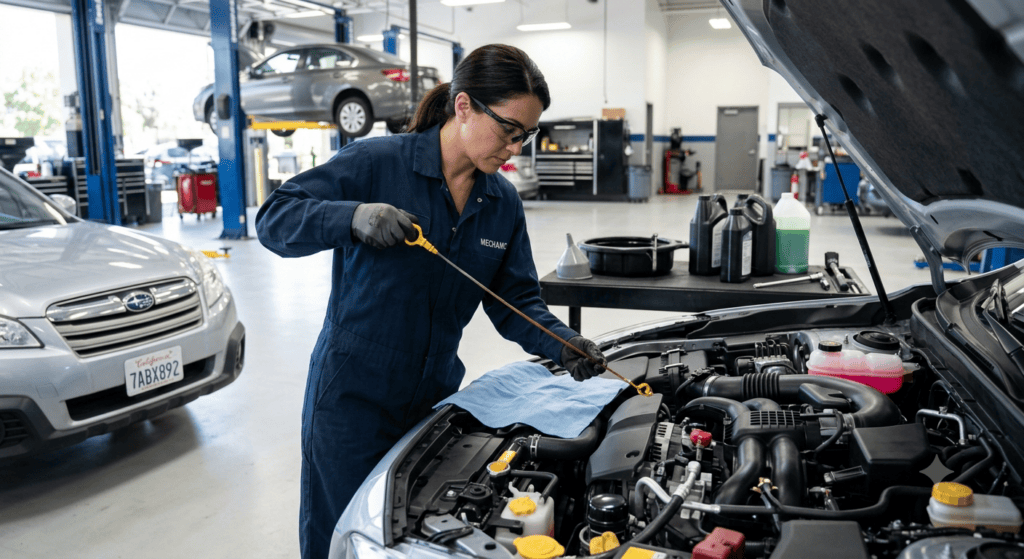
Regular Oil Changes
Oil changes are the single most important maintenance for engine longevity.
Why oil changes extend life:
- Clean oil lubricates engine components
- Prevents sludge buildup
- Removes contaminants
- Protects against metal wear
- Maintains proper engine temperature
- Preserves engine efficiency
Life extension benefit:
- Can extend engine life by 50,000-100,000+ miles
- Prevents major engine damage
- Maintains engine performance
- Preserves fuel economy
Fluid Maintenance
Beyond oil, other fluids are critical for system longevity.
Transmission fluid:
- Lubricates transmission components
- Prevents wear and tear
- Maintains proper shifting
- Protects hydraulic systems
- Cools transmission
Life extension benefit:
- Can extend transmission life by 30,000-50,000+ miles
- Prevents slipping and hard shifts
- Delays transmission failure
- Maintains smooth operation
Coolant:
- Prevents overheating
- Protects against corrosion
- Maintains heat transfer
- Protects water pump
- Prevents rust inside engine
Life extension benefit:
- Prevents catastrophic overheating
- Extends cooling system life
- Protects engine from damage
- Prevents expensive failures
Brake fluid:
- Enables brake function
- Absorbs water over time
- Prevents corrosion
- Maintains brake pressure
- Critical for safety
Life extension benefit:
- Prevents brake system failures
- Maintains safety systems
- Protects brake components
- Prevents moisture damage
Recommendation: Follow manufacturer schedule for all fluid changes and services.
Engine Care
Your engine is the heart of your vehicle. Proper care extends its life significantly.
What extends engine life:
- Regular oil and filter changes
- Timely tune-ups
- Addressing overheating immediately
- Preventing fuel system problems
- Carbon cleaning when needed
- Proper coolant maintenance
- Avoiding extreme driving
Life extension potential: 100,000-200,000+ additional miles
Transmission Care
Transmissions are expensive to repair or replace. Proper maintenance prevents costly failures.
What extends transmission life:
- Regular fluid changes
- Avoiding towing beyond capacity
- Smooth acceleration habits
- Proper cooling system
- Timely repairs
- Using proper transmission fluid
- Allowing warm-up time
Life extension potential: 50,000-100,000+ additional miles
Brake System Care
Brakes wear naturally but proper maintenance extends their life.
What extends brake life:
- Smooth braking habits
- Regular brake inspections
- Prompt pad replacement
- Rotor care and resurfacing
- Fluid maintenance
- Avoiding excessive braking
- Using engine braking on hills
Life extension potential: 20,000-50,000+ additional miles
Suspension Care
Suspension wear is accelerated by poor roads and driving habits.
What extends suspension life:
- Regular alignments
- Smooth driving over bumps
- Avoiding potholes
- Prompt shock/strut replacement
- Component inspection
- Ball joint lubrication
- Steering linkage care
Life extension potential: 30,000-60,000+ additional miles
Follow Manufacturer Maintenance Schedules
Your owner’s manual contains the optimal maintenance schedule for your vehicle.
Why this matters:
- Designed specifically for your vehicle
- Accounts for engine design and materials
- Engineered for maximum lifespan
- Warranty requirements
- Proven to extend life
What to do:
- Keep owner’s manual accessible
- Mark maintenance due dates
- Follow schedule religiously
- Document all maintenance
- Keep receipts and records
- Plan ahead for scheduled maintenance
Address Problems Immediately
Small problems become expensive failures when ignored.
Common progression of neglect:
- Small leak → Major leak → Severe damage
- Worn belt → Belt failure → Engine damage
- Faulty sensor → Performance decline → Engine damage
- Worn tire → Blowout → Loss of control
- Brake wear → Brake failure → Safety hazard
What to do:
- Address warning lights immediately
- Repair leaks promptly
- Don’t ignore unusual sounds
- Fix electrical problems quickly
- Replace worn components early
- Prevent cascade failures
Use Quality Parts and Fluids
The parts you use significantly affect vehicle lifespan.
Quality benefits:
- OEM parts engineered for your vehicle
- Better durability than cheap alternatives
- Proper fit and function
- Better warranty coverage
- Longer lasting performance
Synthetic vs. Conventional fluids:
- Synthetic oils last longer
- Better protection in heat
- Superior high-temperature performance
- Higher cost offset by longer intervals
- Better for Birmingham’s extreme heat
Keep Detailed Maintenance Records
Documentation proves maintenance history and protects resale value.
What to record:
- Date and mileage of service
- Type of service performed
- Parts replaced
- Fluid types and quantities
- Service provider
- Cost
- Any issues noted
Benefits:
- Proves regular maintenance
- Helps plan future maintenance
- Identifies problem patterns
- Valuable for warranty claims
- Demonstrates proper care
- Enhances resale value
Smooth Acceleration and Braking
Aggressive driving significantly reduces vehicle lifespan.
Gentle driving benefits:
- Reduces engine wear
- Extends transmission life
- Reduces brake wear
- Improves fuel economy
- Decreases stress on components
- Extends suspension life
Percentage impact: 15-20% longer lifespan with smooth driving
Proper Warm-up Time
Letting your engine warm up before hard driving protects components.
Why warm-up matters:
- Oil reaches proper viscosity
- Engine warms to operating temperature
- Components expand properly
- Transmissions shift smoothly
- Bearings are properly lubricated
Recommendation: 30 seconds to 1 minute before driving hard
Avoid Extreme Loading
Carrying excessive weight stresses vehicle systems.
Loading guidelines:
- Follow manufacturer weight limits
- Avoid roof rack on highways
- Don’t overload cargo areas
- Avoid towing beyond specifications
- Distribute weight properly
- Consider vehicle fatigue with heavy loading
Impact: 10-15% shorter lifespan with chronic overloading
Regular Movement
Vehicles used regularly last longer than idle vehicles.
Why regular use matters:
- Fluids circulate and clean systems
- Batteries maintain charge
- Components don’t seize
- Tires maintain proper condition
- Electrical systems stay active
- Corrosion prevention
Recommendation: Drive your vehicle at least weekly to maintain systems
Climate-Specific Maintenance for Birmingham
Birmingham’s extreme heat requires extra maintenance attention.
Heat-related maintenance:
- More frequent oil changes (3,000-4,000 miles)
- Battery replacement every 3-4 years
- AC system annual service
- Coolant flushes every 2-3 years
- Tire pressure checks monthly
- Fluid level checks monthly
- Under-vehicle rust inspection
- Undercarriage wash regularly
Life extension in Birmingham: Shorter intervals prevent 30-40% of heat-related failures
Life Extension Potential
With smart maintenance, vehicles can reach:
Realistic longevity:
- 150,000-200,000 miles for average vehicles
- 200,000+ miles for well-maintained vehicles
- 250,000+ miles for meticulously maintained vehicles
- 300,000+ miles for exceptionally well-maintained vehicles
Factors enabling longevity:
- Consistent maintenance (most important)
- Quality parts and fluids
- Gentle driving habits
- Climate considerations
- Early problem identification
- Prompt repairs
- Professional servicing
Conclusion
Your vehicle’s lifespan is largely determined by the maintenance you provide and the driving habits you practice.
Smart maintenance focused on regular fluid changes, prompt repairs, quality parts, following manufacturer schedules, and proper driving habits can extend your vehicle’s life by 50,000-100,000+ miles.
This investment in maintenance saves thousands compared to premature replacement and provides years of reliable transportation.
Treat maintenance as an investment in vehicle longevity, not an expense to minimize. The time and money invested now prevent far greater costs later.