One Hard Impact Can Change How Your Car Drives
Almost every driver eventually hits a pothole harder than expected.
Sometimes the vehicle continues driving normally. Other times, the impact is followed by a new vibration, steering change, unusual noise, or visible tire damage.
The important question is not whether every pothole causes damage—it does not. The question is what changed after the impact.
The strategic plan calls for a seven-point post-impact checklist covering steering, tire, wheel, alignment, noises, vibrations, and braking behavior, while deliberately avoiding claims about specific Birmingham streets being damaged.
1. Check the Tire
When it is safe to stop, look at the tire that took the impact.
Watch for:
- Cuts
- Bulges
- Visible deformation
- Sudden loss of pressure
- Damage around the sidewall
Some tire damage may not be obvious while sitting behind the wheel.
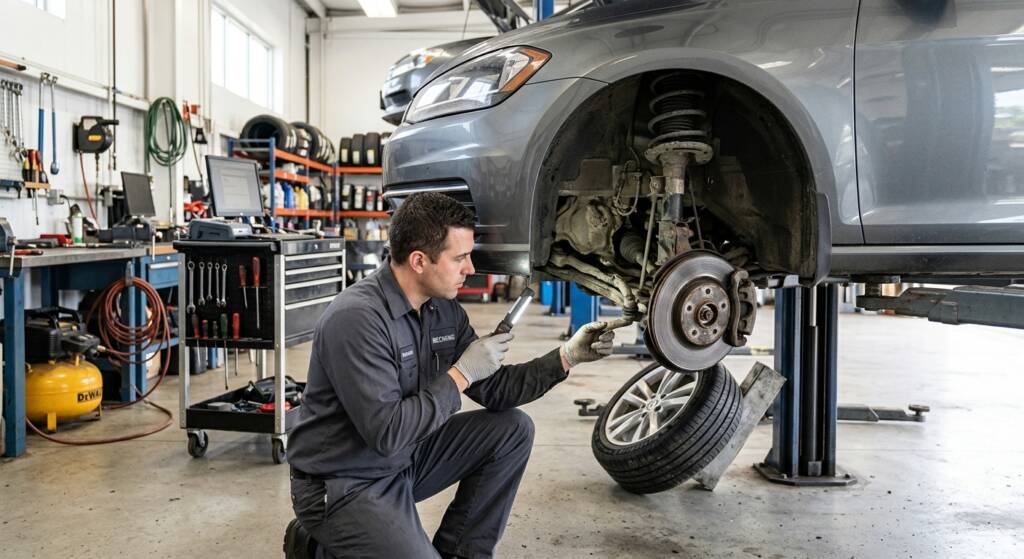
If the tire is losing pressure, visibly deformed, or appears unsafe, do not continue driving normally. Auto Repair 74 can inspect the affected area and help determine what needs attention before the vehicle returns to regular driving.
2. Look at the Wheel
A hard pothole impact can also affect the wheel.
Look for obvious bending, cracking, or a wheel that appears different from the others. You do not need to diagnose the severity yourself.
Visible damage following a hard impact is enough reason to have it professionally evaluated.
3. Pay Attention to the Steering
Once you resume driving—only if the vehicle appears safe—notice whether the steering feels the same as before.
Ask yourself:
- Is the steering wheel centered?
- Does the car pull left or right?
- Does steering feel unusually loose or different?
- Do you need to make corrections to keep the vehicle straight?
A change immediately after a pothole impact is useful information.
At Auto Repair 74, our team can inspect the vehicle and determine whether the impact affected components related to steering, suspension, or vehicle tracking.
4. Notice New Vibrations
A vibration that did not exist before the impact should not be dismissed.
It may appear immediately, at a certain speed, or through the steering wheel, seat, or floor.
Do not assume automatically that the vehicle simply needs balancing. The impact may have affected different areas, and the source should be identified through inspection.
Auto Repair 74 can evaluate the vehicle to determine what is producing the new vibration and recommend the appropriate solution.
5. Listen for New Noises
Turn down the radio and listen to the vehicle.
A new clunk, rubbing sound, knocking noise, or other sound after the impact may provide an important clue.
Pay particular attention when:
- Turning
- Driving over another bump
- Braking
- Accelerating
- Traveling at higher speeds
The sound itself is not a diagnosis, but the situation in which it occurs can help narrow down the source.
6. Watch for Changes in Alignment or Vehicle Tracking
If the vehicle previously drove straight and now pulls or requires constant steering correction, something may have changed after the impact.
Uneven steering behavior can also contribute to tire wear if the underlying condition continues.
Instead of assuming an alignment alone will solve the problem, the affected areas should first be evaluated. At Auto Repair 74, we can inspect the vehicle and determine what service is appropriate based on the impact and the symptoms that followed it.
7. Pay Attention to Braking Behavior
Finally, notice whether the car behaves differently when you brake.
Does it pull?
Does the steering wheel behave differently?
Has a new vibration or noise appeared?
Any significant change in braking behavior after an impact deserves attention.
If braking feels abnormal after hitting a pothole, Auto Repair 74 can inspect the vehicle and help identify the source before you continue relying on it for everyday driving.
When Should You Stop Driving?
Not every pothole impact requires you to immediately stop using the vehicle.
However, continuing to drive may not be appropriate if you notice:
- Rapid tire pressure loss
- Severe visible tire or wheel damage
- Major steering difficulty
- Strong or worsening vibration
- Unusual braking behavior
- Loud mechanical noises
- The vehicle becoming difficult to control
Safety comes first. If the vehicle does not feel safe to drive, do not treat the symptom as something to “test” by continuing down the road.
Why Pothole Damage Isn’t Always Obvious
Some impact-related changes are immediately visible. Others reveal themselves only once the vehicle reaches a certain speed or is driven again.
That is why the absence of dramatic visible damage does not necessarily tell the whole story.
If the vehicle feels exactly the same afterward and there is no visible damage, there may be no problem. But when a new symptom begins immediately after an impact, the timing is worth taking seriously.
Why This Matters for Birmingham Drivers
Potholes and road impacts are a general urban-driving risk, and this article is intentionally designed to be locally relevant without claiming that any particular Birmingham street is damaged.
For drivers moving through Birmingham every day, knowing what to check immediately after an impact can help distinguish a routine bump from something that deserves professional attention.
Why Choose Auto Repair 74
The plan connects pothole-related concerns with suspension, alignment, balancing, and general inspection services.
Rather than assuming which service a vehicle needs, Auto Repair 74 can inspect the affected areas, evaluate the symptoms, and recommend a solution based on what the impact actually changed.
FAQs
Does hitting a pothole always damage the alignment?
No. The result depends on the severity of the impact and the vehicle. A change in steering or tracking afterward is a reason to have it inspected.
What if there is no visible tire damage?
Continue paying attention to pressure, vibration, steering, noises, and overall vehicle behavior. Not every issue is immediately obvious.
Why did my car start vibrating after hitting a pothole?
The impact may have affected a tire, wheel, alignment, suspension-related component, or another area. An inspection is needed to determine the cause.
Something Changed After the Impact? Have It Checked
The most useful clue after hitting a pothole is often simple: your vehicle feels different than it did before.
If you notice new steering, vibration, noise, tire, or braking symptoms, Auto Repair 74 can inspect the vehicle and help determine the appropriate next step.