Your brakes are your vehicle’s most critical safety system. When they fail, the consequences can be catastrophic. Many drivers ignore early warning signs until their brakes fail completely, putting themselves and others at risk. Understanding what your brakes are telling you can prevent accidents and save you from expensive emergency repairs. If you drive in Birmingham or nearby areas like Hoover, Vestavia Hills, Homewood, Mountain Brook, or Irondale, recognizing brake problems early is essential for your safety.
Warning Sign #1: Squealing or Grinding Noises
One of the most common brake warning signs is unusual noise.
Squealing sounds often mean your brake pads are wearing thin. Most brake pads have a built-in indicator that creates this noise when replacement is needed.
Grinding noises are more serious. This sound means your brake pads are completely worn, and metal is grinding against metal. This damages your rotors and significantly increases repair costs.
Warning Sign #2: Vibrations When Braking
If your steering wheel or brake pedal vibrates when you apply the brakes, this usually indicates warped rotors.
Warped rotors occur when:
- Brakes overheat from excessive use
- Brake pads wear unevenly
- Rotors are old and need replacement
This problem affects your vehicle’s stopping ability and should be inspected immediately.
Warning Sign #3: Soft or Spongy Brake Pedal
Your brake pedal should feel firm when pressed.
A soft or spongy pedal often indicates:
- Air in the brake lines
- Low brake fluid
- Brake fluid leak
- Worn brake components
This is a serious safety issue that requires immediate professional attention.
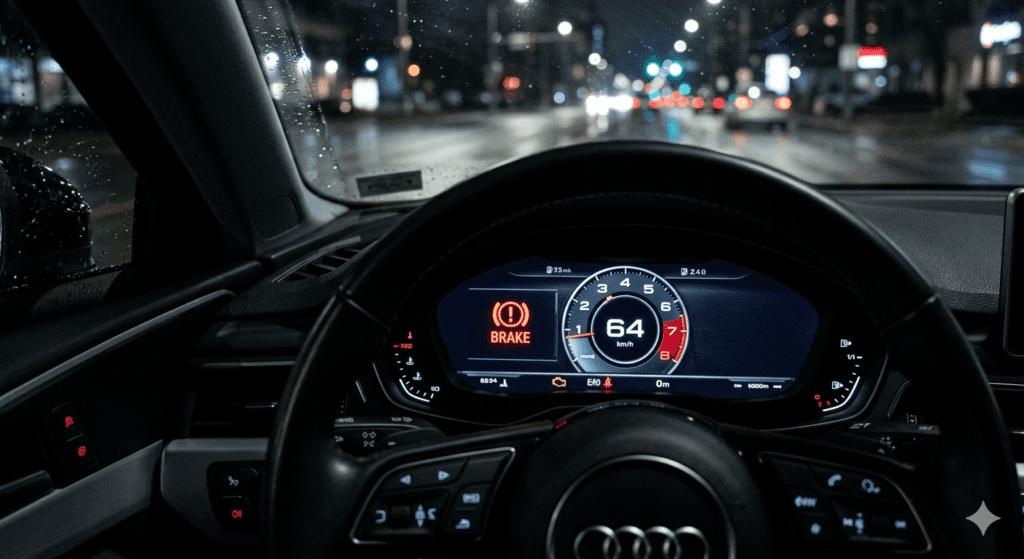
Warning Sign #4: Brake Warning Light
Modern vehicles have a dashboard warning light specifically for brake system problems.
If this light appears, it could indicate:
- Low brake fluid
- Worn brake pads
- ABS system malfunction
- Parking brake engagement
Never ignore this warning light. Have your brakes inspected as soon as possible.
Warning Sign #5: Pulling to One Side
If your vehicle pulls to the left or right when braking, this suggests uneven brake wear or a brake caliper problem.
Common causes include:
- Stuck brake caliper
- Uneven brake pad wear
- Brake fluid contamination
- Damaged brake hose
This not only affects braking performance but also creates dangerous driving conditions.
Warning Sign #6: Burning Smell
A sharp, chemical odor after heavy braking often means your brakes are overheating.
This can happen when:
- Driving downhill for extended periods
- Towing heavy loads
- Riding the brakes in traffic
- Brake calipers are stuck
Pull over safely and allow your brakes to cool before continuing. If the smell persists, have them inspected.
How Often Should You Inspect Your Brakes?
Brake inspection frequency depends on your driving habits and conditions.
General recommendations:
- Visual inspection → every oil change
- Professional brake inspection → every 10,000-15,000 miles
- Brake pad replacement → typically every 25,000-70,000 miles
- Brake fluid flush → every 2-3 years
Birmingham driving conditions, including stop-and-go traffic and hilly terrain, can accelerate brake wear.
The Cost of Ignoring Brake Problems
Delaying brake repairs always costs more in the long run.
What starts as a simple brake pad replacement can become:
- Rotor replacement or resurfacing
- Caliper replacement
- Brake line repairs
- Complete brake system overhaul
Early intervention saves hundreds, sometimes thousands of dollars.
Why Professional Brake Inspection Matters
Brake systems are complex and require specialized knowledge to diagnose properly.
Professional inspection includes:
- Brake pad thickness measurement
- Rotor condition assessment
- Brake fluid quality check
- Caliper function testing
- Brake line inspection
This comprehensive approach identifies problems before they become dangerous.
Conclusion
Your brakes give you clear warning signs before they fail completely.
Squealing noises, vibrations, soft pedals, warning lights, pulling, and burning smells all indicate problems that need immediate attention.
Regular brake inspections and addressing issues early keep you safe and save you money on repairs.
If you’re experiencing any of these warning signs, don’t wait for your brakes to fail.