Your vehicle’s dashboard warning lights are like a health monitoring system for your car.
Each light serves a specific purpose: alerting you to problems that need attention before they become serious failures.
Unfortunately, many drivers ignore these warnings or don’t understand what they mean, leading to expensive repairs and dangerous breakdowns.
If you drive in Birmingham or nearby areas like Hoover, Vestavia Hills, Homewood, Mountain Brook, or Irondale, understanding your dashboard lights can save you from costly emergencies.
Check Engine Light: The Most Misunderstood Warning
The check engine light is probably the most common and most confusing dashboard warning.
What it means:
- Emission system problem
- Sensor malfunction
- Engine performance issue
- Fuel system problem
Common causes:
- Loose gas cap
- Faulty oxygen sensor
- Catalytic converter issues
- Spark plug problems
What you should do:
- Check if your gas cap is tight
- Note any performance changes
- Get a diagnostic scan immediately
- Don’t ignore it hoping it will go away
A flashing check engine light indicates a serious problem requiring immediate attention.
Oil Pressure Warning Light: Stop Immediately
This light looks like an old-fashioned oil can and indicates dangerously low oil pressure.
What it means:
- Low oil level
- Oil pump failure
- Oil pressure sensor malfunction
- Serious engine problem
What you should do:
- Pull over safely as soon as possible
- Turn off the engine
- Check your oil level
- Do not continue driving
Driving with low oil pressure can cause complete engine failure within minutes.
Battery Warning Light: Electrical System Problem
This light looks like a battery with positive and negative symbols.
What it means:
- Charging system malfunction
- Weak or failing battery
- Alternator problem
- Loose or corroded battery connections
What you should do:
- Have your charging system tested immediately
- Check battery connections
- Avoid using unnecessary electrical accessories
- Get to a repair shop before the battery dies completely
Ignoring this warning can leave you stranded with a dead battery.
Brake System Warning Light: Critical Safety Issue
This light indicates a problem with your brake system.
What it means:
- Low brake fluid
- Worn brake pads
- ABS system malfunction
- Parking brake engaged
What you should do:
- Ensure parking brake is fully released
- Check brake fluid level
- Test brake pedal feel
- Have brakes inspected immediately if light stays on
Your brakes are your vehicle’s most important safety system. Never ignore this warning.
Temperature Warning Light: Overheating Engine
This light shows a thermometer in liquid or the word «TEMP.»
What it means:
- Engine overheating
- Coolant leak
- Thermostat failure
- Cooling fan malfunction
What you should do:
- Pull over safely
- Turn off the engine
- Let it cool completely
- Check coolant level when cool
- Call for assistance if necessary
Driving with an overheating engine can cause permanent engine damage.
Tire Pressure Monitoring System (TPMS) Light
This light looks like a tire cross-section with an exclamation point.
What it means:
- One or more tires significantly underinflated
- TPMS sensor malfunction
- Spare tire installed without sensor
What you should do:
- Check all tire pressures including spare
- Inflate to recommended pressure
- Look for visible tire damage
- Have system checked if light persists after correction
Proper tire pressure affects safety, handling, and fuel efficiency.
ABS Warning Light: Anti-Lock Brake Issue
This light shows «ABS» and indicates a problem with your anti-lock brake system.
What it means:
- ABS system malfunction
- Wheel speed sensor problem
- ABS module issue
- Low brake fluid affecting ABS
What you should do:
- Your regular brakes still work
- Have the system diagnosed soon
- Drive cautiously in wet conditions
- Don’t ignore the warning
While your brakes will still function, you lose the safety benefit of anti-lock braking.
Transmission Temperature Warning Light
This light indicates your transmission is overheating.
What it means:
- Transmission fluid low
- Transmission overheating
- Towing excessive weight
- Transmission mechanical problem
What you should do:
- Reduce speed
- Avoid heavy acceleration
- Stop if possible and let cool
- Check transmission fluid level
- Have transmission inspected
Overheating can cause permanent transmission damage costing thousands to repair
When Multiple Lights Appear Together
If several warning lights illuminate simultaneously, this often indicates:
- Electrical system failure
- Computer system malfunction
- Serious mechanical problem
- Multiple related failures
What you should do:
- Stop safely as soon as possible
- Do not continue driving
- Call for professional assistance
- Have vehicle towed if necessary
Why Professional Diagnosis Matters
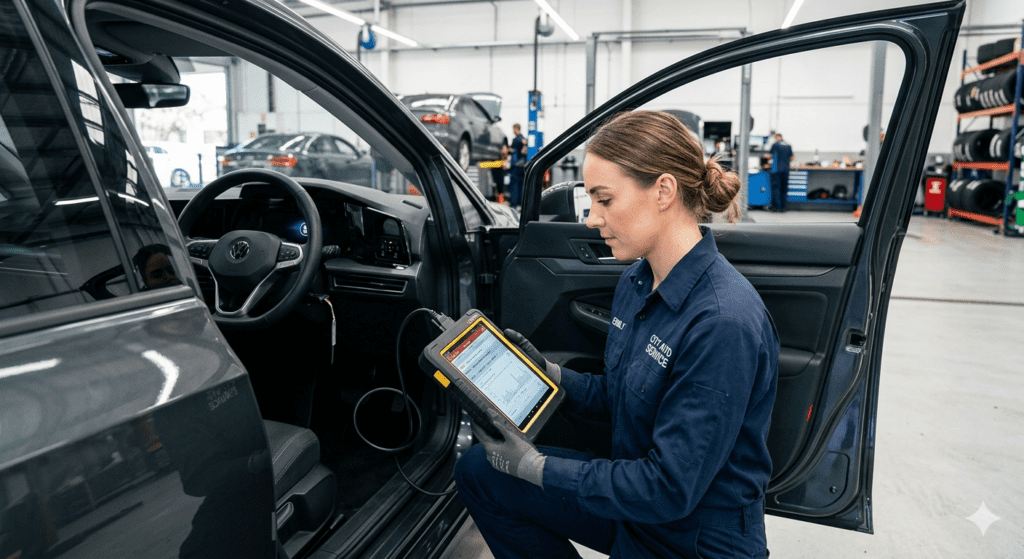
Modern vehicles use sophisticated computer systems to monitor hundreds of components.
Professional diagnostic equipment can:
- Read specific error codes
- Identify exact problem location
- Determine repair priority
- Clear codes after proper repair
Guessing at dashboard warnings often leads to unnecessary repairs or ignored serious problems.
Conclusion
Your dashboard warning lights are designed to protect you and your vehicle.
Each light provides specific information about problems that need attention before they become expensive failures or dangerous situations.
Understanding what these lights mean and responding appropriately can prevent breakdowns, save money, and keep you safe on the road.
When warning lights appear, don’t ignore them hoping they’ll disappear. Get professional diagnosis and repair.