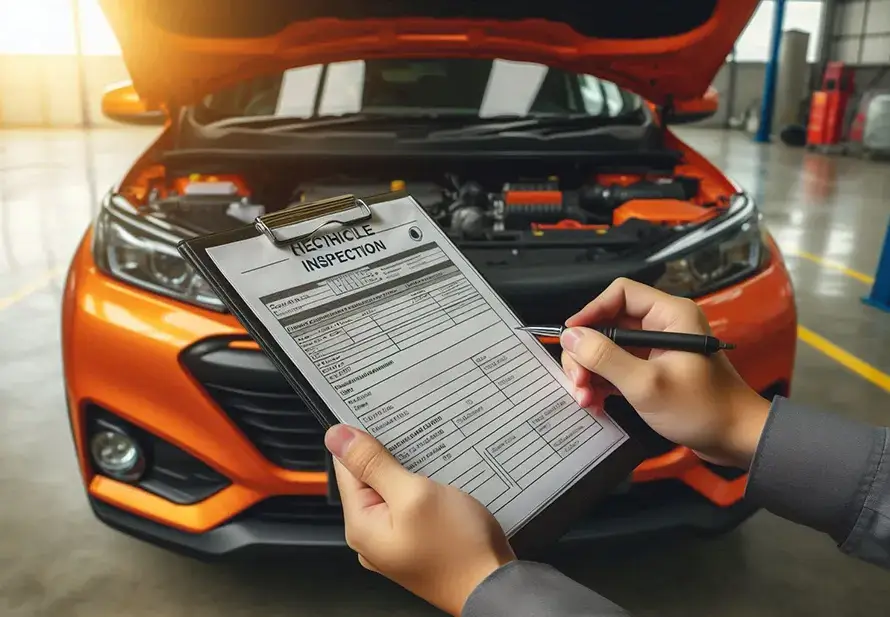
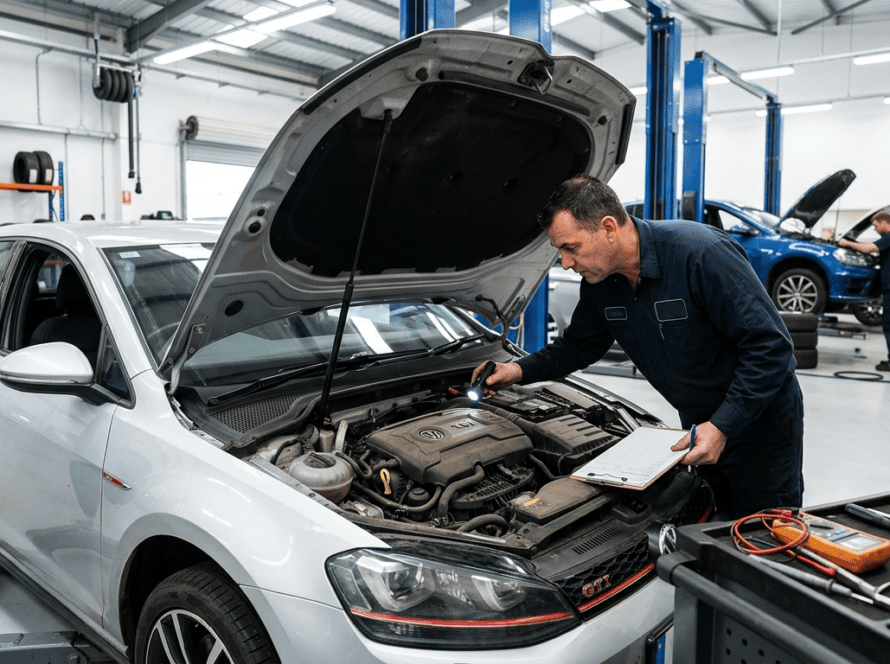
Your vehicle is more than transportation—it’s often a protective shell for your family.
Regular car inspections ensure that critical safety systems are functioning properly, protecting your loved ones on every journey.
Many parents focus on driver safety but overlook vehicle maintenance as a crucial safety factor. A vehicle with failing brakes, worn tires, or faulty lighting poses serious risks regardless of how carefully you drive. If you’re a parent or caregiver in Birmingham or nearby areas like Hoover, Vestavia Hills, Homewood, Mountain Brook, or Irondale, understanding how inspections protect your family is essential.
How Vehicle Conditions Affect Safety
Your vehicle’s mechanical condition directly impacts your family’s safety.
Safety systems dependent on maintenance:
- Braking system (requires regular inspection and maintenance)
- Steering system (alignment and component wear affect control)
- Lighting system (visibility critical for nighttime safety)
- Tires (tread and pressure affect traction and stopping)
- Suspension (affects stability and handling)
- Electrical system (powers safety features)
- Airbags (rely on electrical and mechanical systems)
Neglecting any of these systems increases accident risk for your family.
Problem #1: Brake System Failures
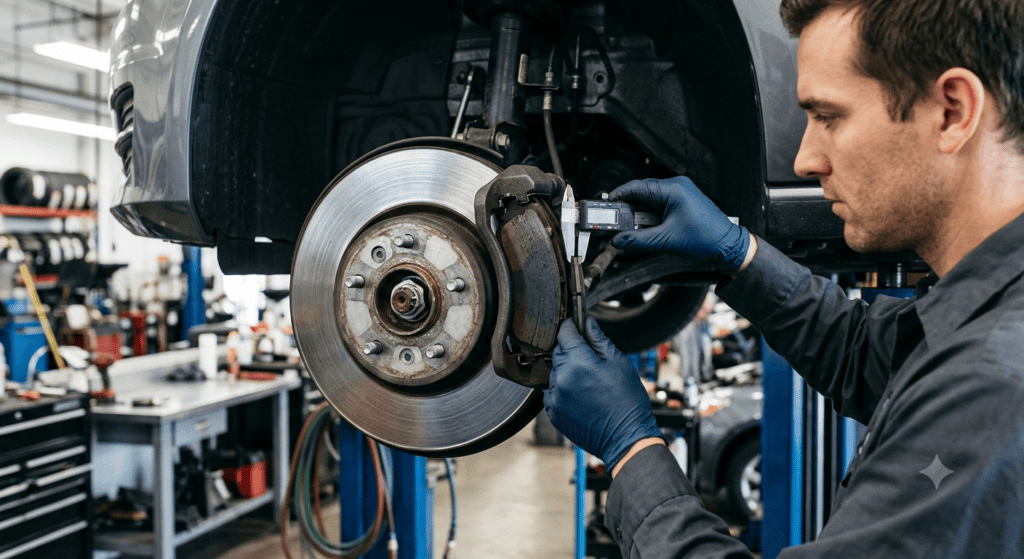
Your brakes are your vehicle’s most critical safety system, and they require regular inspection.
Why brakes fail:
- Worn brake pads reduce stopping power
- Warped rotors cause vibration and longer stopping distances
- Brake fluid degradation reduces effectiveness
- Fluid leaks reduce stopping power
- Caliper problems cause uneven braking
Safety impacts:
- Longer stopping distances in emergencies
- Inability to stop quickly for hazards
- Loss of control in emergency braking
- Brake failure in critical moments
- Increased accident severity
Inspection prevents:
- Brake failure while family in vehicle
- Loss of stopping power
- Emergency braking inability
- Collision risk from brake problems
Recommendation: Have brakes inspected every 10,000-15,000 miles, especially if carrying children or elderly passengers.
Problem #2: Tire Safety Issues
Tires are your vehicle’s only contact with the road, making them critical safety components.
Why tire problems are dangerous:
- Worn tires reduce traction in wet conditions
- Bald tires hydroplane in rain
- Underinflated tires heat up and blow out
- Uneven wear indicates alignment problems
- Damaged sidewalls can cause sudden failure
Safety impacts:
- Loss of control in wet weather
- Blowouts at highway speeds
- Skidding and hydroplaning
- Longer stopping distances
- Increased crash severity
Inspection prevents:
- Tire blowouts with family aboard
- Loss of control in emergency
- Wet weather accidents
- Highway failures
- Dangerous tire conditions
Recommendation: Inspect tires monthly, especially before long family trips. Replace when tread reaches 4/32″.
Problem #3: Lighting System Failures
Visibility and being visible to other drivers are critical safety factors, especially with children in the vehicle.
Why lighting matters:
- Headlights allow you to see road hazards
- Brake lights alert following drivers
- Turn signals communicate intent
- Visibility increases safety
- Poor lighting causes accidents
Safety impacts:
- Inability to see road hazards at night
- Other drivers not seeing your vehicle
- Inability to signal turns
- Reduced visibility in poor weather
- Increased accident risk
Inspection prevents:
- Nighttime accidents from poor visibility
- Collisions from non-functioning brake lights
- Confusion from broken turn signals
- Rear-end collisions
- Hit-and-run situations
Recommendation: Test all lights monthly. Have damaged lights repaired immediately.
Problem #4: Steering and Suspension Issues
Proper steering and suspension control are essential for safe vehicle handling, especially with children.
Why steering/suspension matters:
- Alignment affects how vehicle tracks
- Worn components reduce control
- Loose steering feels unsafe
- Poor suspension affects stability
- Worn tie rods affect steering
Safety impacts:
- Vehicle pulling to one side
- Difficulty controlling vehicle
- Instability in turns
- Loss of control during emergency maneuvers
- Increased rollover risk
Inspection prevents:
- Loss of vehicle control
- Inability to avoid hazards
- Steering failure
- Instability in emergencies
- Rollover accidents
Recommendation: Have alignment and suspension checked annually or if vehicle pulls to one side.
Problem #5: Electrical System and Airbags
Your vehicle’s electrical system powers critical safety features including airbags.
Why electrical systems matter:
- Battery powers starter and ignition
- Alternator powers electrical systems
- Airbag systems require proper power
- Warning lights require function
- Power windows and locks provide security
Safety impacts:
- Vehicle failure to start leaving family stranded
- Airbag failure in crash
- Inability to operate power locks
- Loss of dashboard warning information
- Disabled safety systems
Inspection prevents:
- Vehicle breakdowns with family
- Airbag failure in accidents
- Loss of security features
- Inability to receive warnings
- Electrical system failure
Recommendation: Have battery tested annually and replaced every 3-4 years. Have airbag systems inspected.
Problem #6: Engine and Transmission Problems
Engine and transmission problems can leave your family stranded in dangerous situations.
Why engine condition matters:
- Reliable operation ensures you reach destination
- Engine problems can cause unexpected failure
- Breakdowns in unsafe locations endanger family
- Stranded vehicles make family vulnerable
- Engine failure increases accident risk
Safety impacts:
- Vehicle breakdown on highway
- Family stranded in unsafe area
- Increased exposure to traffic hazards
- Vulnerable to roadside dangers
- Missed medical appointments (emergencies)
Inspection prevents:
- Engine failure with family aboard
- Unexpected breakdowns
- Family stranded in dangerous situations
- Highway emergency situations
- Vulnerable positions
Recommendation: Have engine and transmission serviced per manufacturer schedule.
Problem #7: Fluid Leaks and Overheating
Fluid problems can cause sudden vehicle failure endangering your family.
Why fluid condition matters:
- Oil lubricates engine preventing seizure
- Coolant prevents overheating
- Brake fluid enables braking
- Transmission fluid enables shifting
- Leaks indicate system problems
Safety impacts:
- Engine seizure at dangerous times
- Overheating in traffic
- Brake failure
- Transmission failure
- Loss of control or power
Inspection prevents:
- Engine damage and failure
- Overheating emergencies
- Brake system failure
- Unexpected breakdowns
- Loss of vehicle control
Recommendation: Check all fluid levels monthly. Investigate any leaks immediately.
Problem #8: Safety Glass and Visibility
Being able to see clearly and having intact windows protects your family.
Why visibility matters:
- Cracked windshields obstruct vision
- Window damage reduces visibility
- Mirror problems prevent seeing hazards
- Visibility affects driver reaction time
- Poor visibility increases accident risk
Safety impacts:
- Inability to see road hazards
- Reduced peripheral vision
- Difficulty judging distance
- Impaired mirror visibility
- Increased accident severity
Inspection prevents:
- Visibility-related accidents
- Window shattering in accident
- Glass entering passenger area
- Reduced driver awareness
- Preventable collisions
Recommendation: Keep windows and mirrors clean. Repair cracked windshields immediately. Maintain all safety glass.
Problem #9: Door Locks and Security
Proper door locks and security features protect your family from external threats.
Why security matters:
- Locks prevent unauthorized entry
- Power locks enable quick security
- Door latches secure occupants
- Security systems deter theft
- Disabled locks create vulnerability
Safety impacts:
- Inability to secure vehicle
- Loss of power locking
- Occupants at risk from outside threats
- Reduced protection in emergencies
- Inability to keep vehicle secure
Inspection prevents:
- Security breaches
- Door latch failures
- Unauthorized access
- Loss of security features
- Occupant exposure to threats
Recommendation: Test all door locks monthly. Verify power locks function. Address security problems immediately.
Problem #10: Seatbelts and Airbags
Seatbelt and airbag systems protect your family in crashes—they must function properly.
Why they matter:
- Seatbelts reduce injury severity
- Airbags cushion impact
- Combined systems save lives
- Damage reduces effectiveness
- Non-function is dangerous
Safety impacts:
- Reduced crash protection
- Increased injury severity
- Death prevention reduction
- Child occupant vulnerability
- Occupant vulnerability
Inspection prevents:
- Seatbelt failure in crash
- Airbag non-deployment
- Reduced crash protection
- Increased injury severity
- Preventable deaths
Recommendation: Test seatbelts monthly. Have airbag systems inspected. Ensure proper seatbelt use always.
Regular Inspection Schedule for Family Safety
Monthly (or before long trips):
- Test all lights
- Check tire pressure and condition
- Verify seatbelt function
- Check all fluid levels
- Test brakes (feel and responsiveness)
- Verify steering smoothness
- Check visibility (windows/mirrors)
- Test door locks
Every 6 months:
- Professional brake inspection
- Tire rotation and alignment check
- Suspension inspection
- Electrical system check
- Fluid condition review
- Battery load test
- Light function verification
- Safety system inspection
Annually:
- Complete professional vehicle inspection
- Brake system evaluation
- Tire assessment
- Suspension evaluation
- Electrical system testing
- Airbag system check
- Window/mirror condition
- Door/lock function test
The Cost of Neglected Safety
Hidden dangers of skipped inspections:
- Brake failure during family drive
- Blowout on highway with children
- Loss of steering control
- Electrical failure stranding family
- Airbag non-deployment in crash
- Window/door security failure
- Seatbelt failure in accident
- Visibility-related accident
Inspection Provides Peace of Mind
Regular inspections give you confidence that your vehicle is safe for your family.
Benefits beyond safety:
- Confidence for long family trips
- Reduced travel anxiety
- Knowledge that children are protected
- Early problem detection
- Prevention of breakdowns
- Extended vehicle lifespan
- Better resale value
Conclusion
Your vehicle is one of the most important safety investments you make for your family.
Regular inspections ensure that all critical safety systems are functioning properly and that your vehicle is reliable for protecting your loved ones.
By conducting monthly checks, having professional inspections twice yearly, and addressing problems immediately, you maximize safety for your family on every journey.
Your family’s safety is worth the time and investment in regular vehicle inspections. Make it a priority like seatbelts and driving carefully.