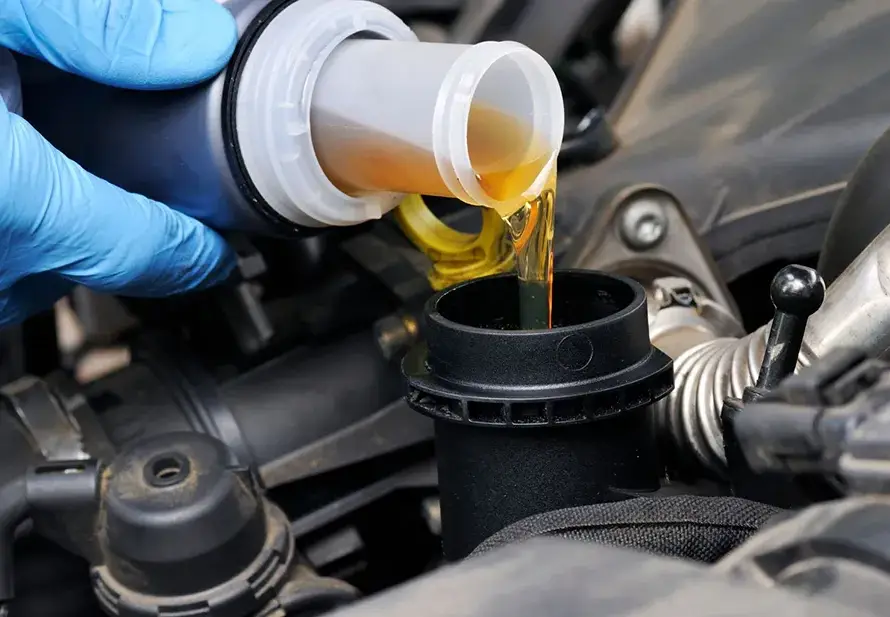
Oil changes are the most basic maintenance task, yet they’re the most misunderstood. Many drivers either skip them too long or get them too frequently. The reality is that timing matters significantly—getting oil changes at the right interval is crucial for engine health.
What Oil Does in Your Engine
Before discussing timing, it’s important to understand what oil actually does.
1. Lubrication:
- Reduces friction between moving parts
- Prevents metal-to-metal contact
- Allows smooth operation
- Reduces wear and tear
2. Cooling:
- Transfers heat away from hot engine parts
- Helps regulate engine temperature
- Works with cooling system
- Protects from overheating damage
3. Cleaning:
- Removes dirt and particles
- Prevents sludge buildup
- Keeps engine components clean
- Maintains engine efficiency
4. Protection:
- Creates protective coating on parts
- Prevents corrosion and rust
- Protects against oxidation
- Seals piston rings
5. Power transmission:
- Transfers hydraulic pressure
- Operates valve lifters
- Powers hydraulic components
- Contributes to engine efficiency
Why Oil Breaks Down Over Time
Oil doesn’t last forever. It degrades continuously while your engine operates.
Factors causing oil breakdown:
Heat:
- High engine temperatures break down molecular bonds
- Thermal stress weakens oil viscosity
- Extreme heat causes oxidation
- Temperature swings accelerate degradation
Contamination:
- Fuel dilutes oil during combustion
- Dust and particles mix with oil
- Metal particles wear from friction
- Moisture condenses in oil
- Carbon and sludge accumulate
Oxidation:
- Oxygen exposure degrades oil
- Chemical reactions weaken oil
- Acid formation occurs
- Protective properties diminish
- Corrosion risk increases
Mechanical stress:
- Constant shearing thins oil
- Viscosity decreases over time
- Protection capability reduces
- Breakdown accelerates
Birmingham’s Climate Impact on Oil Change Intervals
Birmingham’s extreme heat significantly affects oil quality and change intervals.
Heat effects on oil:
- Extreme temperatures above 95°F accelerate breakdown
- High humidity increases moisture in oil
- Constant air conditioning usage stresses oil
- Summer heat reduces oil lifespan
- Thermal cycling stresses oil viscosity
Climate-adjusted intervals:
- Normal regions: 5,000-7,500 miles
- Birmingham/hot climates: 3,000-5,000 miles
- Heavy traffic: 3,000-4,500 miles
- Frequent stop-and-go: 2,500-3,500 miles
Understanding Oil Types and Change Intervals
Different oil types have different service intervals.
Conventional oil:
- Interval: 3,000-5,000 miles
- Cost: Least expensive
- In Birmingham heat: Change every 3,000-4,000 miles
- Requires frequent changes
- Good basic protection
Synthetic blend oil:
- Interval: 5,000-7,500 miles
- Cost: Moderate
- In Birmingham heat: Change every 4,000-5,500 miles
- Balances cost and performance
- Better protection than conventional
Full synthetic oil:
- Interval: 7,500-10,000 miles
- Cost: Most expensive
- In Birmingham heat: Change every 5,000-7,000 miles
- Longest intervals available
- Superior protection and performance
- Better for extreme heat
High-mileage oil:
- Interval: 5,000-7,500 miles
- Cost: Moderate to high
- Designed for older engines
- Contains extra conditioning agents
- Reduces oil consumption
How to Determine Your Correct Interval
1. Check your owner’s manual:
- Manufacturer recommendations are designed for your specific vehicle
- Different engines have different requirements
- Most accurate source of information
- Account for manufacturer guidance first
2. Consider your driving habits:
- Frequent stop-and-go traffic = shorter intervals
- Highway driving = longer intervals
- Towing = shorter intervals
- Short trips = shorter intervals
- Idle time = shorter intervals
3. Factor in local climate:
- Hot climates = shorter intervals
- Birmingham heat = definitely shorter intervals
- Humidity effects = add 1,000 miles to normal
- Industrial air = add 500-1,000 miles
4. Account for fuel quality:
- Premium fuel allows longer intervals
- Low-quality fuel requires shorter intervals
- Fuel additives affect breakdown rate
- Ethanol content matters
Signs Your Oil Needs Changing Sooner
Even if you haven’t reached your mileage interval, these signs indicate immediate oil change:
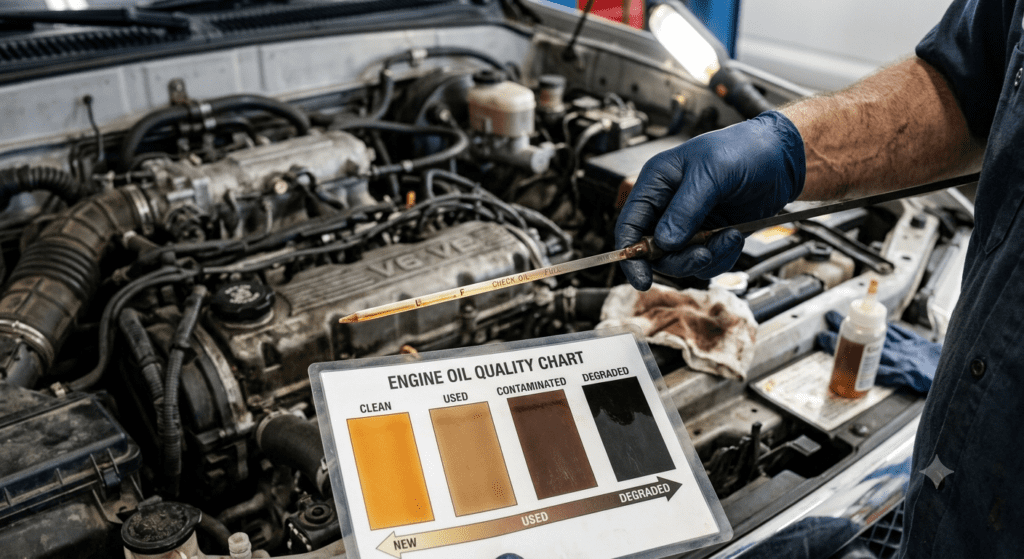
Dark, dirty oil:
- When oil appears black or very dark
- Indicates heavy contamination
- May mean intervals were too long
- Change immediately
Metal particles in oil:
- Check oil dipstick for metallic appearance
- Indicates excessive wear
- Engine wear particles indicate problems
- Change immediately and inspect engine
Oil level dropping rapidly:
- Losing more than 1 quart per 500 miles
- May indicate leak or burn
- Change and investigate cause
- Address underlying problem
Burning oil smell:
- Indicates oil breakdown or leak
- Engine running too hot
- Oil not protecting properly
- Change and diagnose problem
Unusual engine noise:
- Valvetrain knocking or ticking
- May indicate inadequate lubrication
- Change oil immediately
- If noise continues, see mechanic
Check engine light related to oil:
- Some vehicles alert when oil quality degrades
- Some detect low oil level
- Address immediately
- Change oil and check for leaks
Oil Change Process in Birmingham Heat
Before oil change:
- Let engine cool to warm (not hot)
- Hot oil causes burns and drain plug slips
- Allow oil to drain for 2-3 minutes after engine shutdown
- Prepare catch pan and tools
During oil change:
- Drain old oil completely
- Replace drain plug (check for damage)
- Replace oil filter properly
- Use correct oil type and quantity
- Don’t overfill oil
After oil change:
- Start engine and check for leaks
- Let run for 30 seconds to circulate new oil
- Check oil level after warming
- Dispose of old oil properly (never in trash or drain)
The True Cost of Delayed Oil Changes
Skipping or delaying oil changes creates expensive problems.
What happens with overdue oil changes:
At 5,000 miles past interval:
- Oil viscosity reduced by 15-20%
- Oxidation and sludge building up
- Engine wear accelerated
- Protection diminishing
At 10,000 miles past interval:
- Oil viscosity reduced by 30-40%
- Heavy sludge accumulation
- Engine wear significantly increased
- Protection nearly gone
At 15,000+ miles past interval:
- Engine damage likely occurring
- Sludge throughout engine
- Filters clogged and bypassed
- Major repair risk
Financial impact:
- Late oil change: $40-70
- Engine sludge cleaning: $200-500
- Bearing replacement: $1,500-3,000
- Complete engine replacement: $3,000-8,000
Oil Change Maintenance Record
Keep detailed records:
- Date of each oil change
- Mileage at change
- Oil type and quantity
- Filter type
- Service provider
- Any noted issues
This documentation:
- Helps plan future maintenance
- Proves regular maintenance to buyers
- Identifies patterns or problems
- Valuable for warranty claims
- Shows vehicle history
Conclusión
Oil changes are more important than many drivers realize. Timing matters significantly—changing your oil at proper intervals prevents engine damage, maintains warranty coverage, and protects your investment. In Birmingham’s extreme heat, more frequent oil changes provide essential protection compared to cooler regions. By understanding your specific vehicle’s requirements, your driving habits, and Birmingham’s climate impact, you can establish the proper oil change interval for your situation.