Your vehicle’s engine is incredibly complex, with hundreds of components working together in perfect synchronization. When something goes wrong, diagnosis requires specialized knowledge, advanced equipment, and systematic troubleshooting—not guesswork.
Why Professional Diagnosis Matters
Incorrect engine diagnosis leads to expensive mistakes.
Common diagnosis errors:
- Replacing parts that weren’t actually faulty
- Missing the actual root cause
- Creating new problems while fixing the wrong thing
- Repeating the same repair multiple times
- Costing customers thousands unnecessarily
Proper diagnosis ensures:
- Correct identification of actual problems
- Efficient repair with no wasted parts
- First-time repair success
- Customer confidence and trust
- Minimal diagnostic cost relative to parts costs
Step 1: Customer Interview and History
Professional diagnosis begins before any computer scans.
Questions asked:
- When did the problem start?
- What symptoms are present?
- Have you noticed patterns?
- Any recent repairs or modifications?
- Maintenance history?
- Driving conditions when problem occurs?
Why this matters:
- Customer input provides crucial clues
- Symptoms help narrow possibilities
- Recent work may be related
- Maintenance history reveals patterns
- Context helps avoid misdiagnosis
Step 2: Visual Inspection
Before computers, technicians conduct thorough visual inspection.
What mechanics inspect:
- Engine bay overall condition
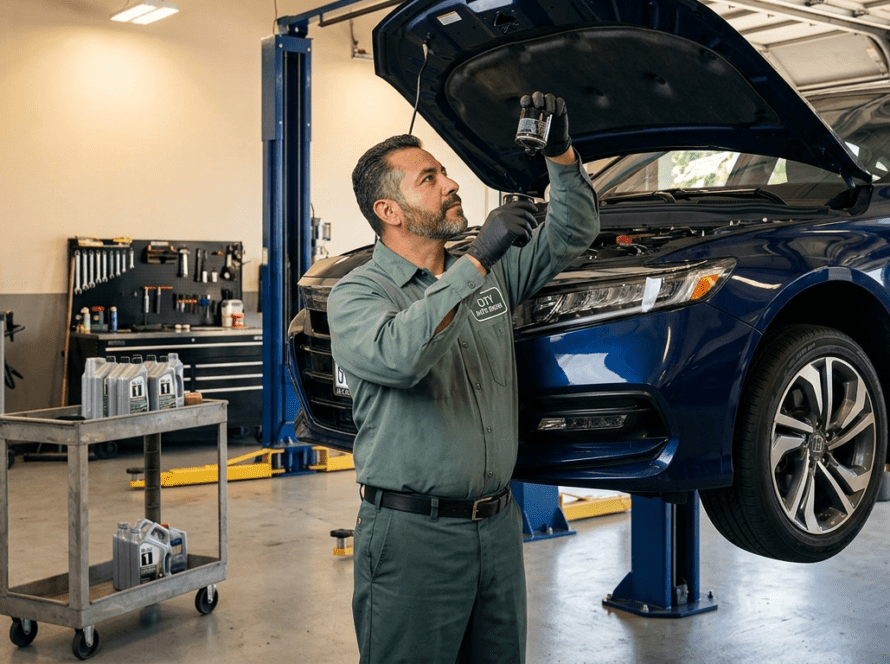
- Oil level and condition
- Coolant level and condition
- Fluid leaks (oil, coolant, fuel)
- Battery condition and connections
- Wiring and connector integrity
- Spark plug wires and connections
- Hose condition and connections
- Exhaust system for leaks
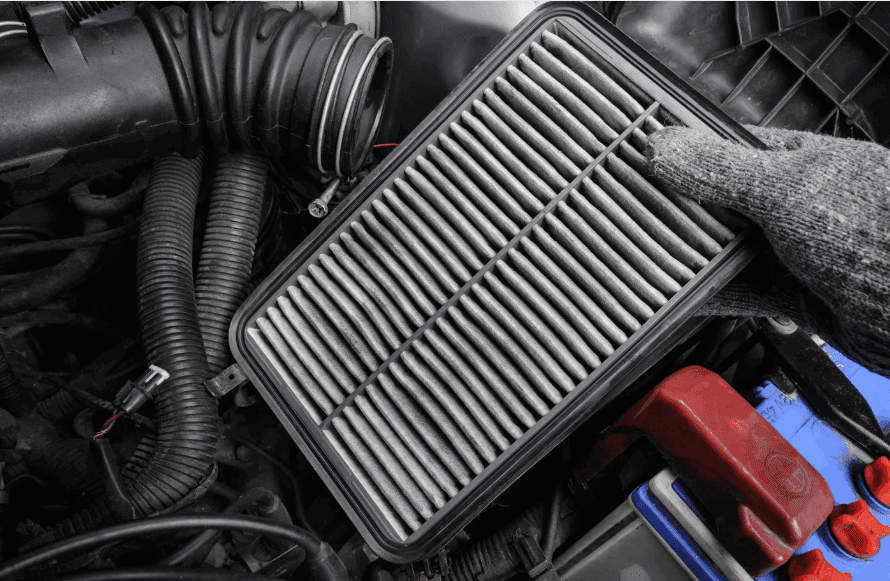
- Air filter condition
Why visual inspection matters:
- Identifies obvious problems immediately
- Prevents unnecessary scanning
- Reveals conditions affecting diagnosis
- Saves diagnostic time and cost
- Catches safety issues
Step 3: Computer Diagnostic Scanning
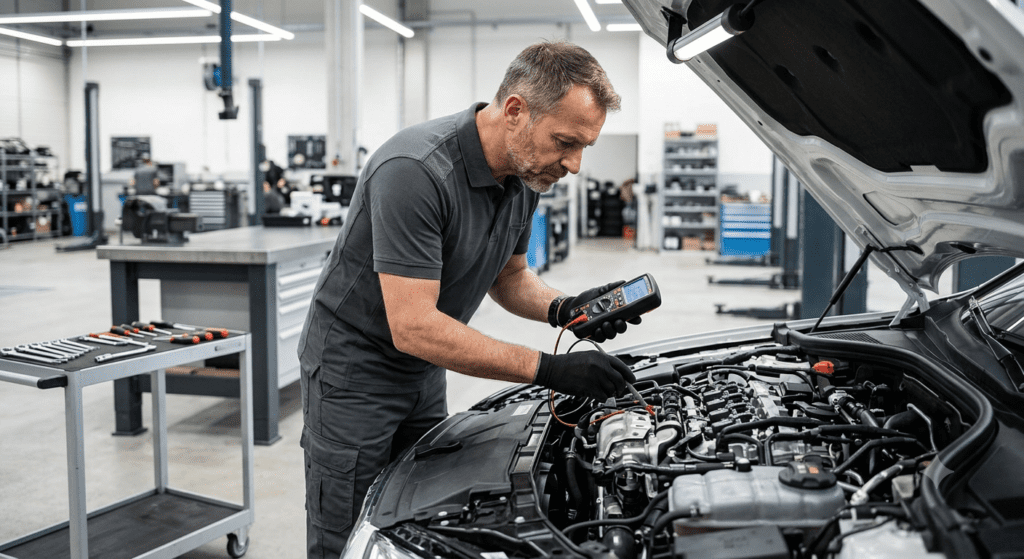
Modern vehicles have onboard computers that monitor engine performance constantly.
What diagnostic scanners do:
- Read error codes stored in computer memory
- Display live sensor data in real-time
- Show parameters outside normal range
- Identify freeze-frame data when error occurred
- Provide system-by-system testing
- Reveal intermittent problems
- Test individual circuits and components
Types of scanners:
- Basic code readers: Read standard codes only
- Intermediate scanners: Read all codes with descriptions
- Professional scanners: Full system access and testing
- Manufacturer scanners: Specific vehicle brand capabilities
- Advanced scanners: Live data graphing and advanced diagnostics
Understanding Error Codes
Error codes point toward problems but don’t always identify root causes.
Code examples:
P0171 – System Too Lean:
- Could indicate: Fuel injector problem, oxygen sensor failure, vacuum leak, fuel pump issue, air filter clogged
- Requires further diagnosis to identify actual cause
P0300 – Random Misfire:
- Could indicate: Bad spark plug, fuel injector issue, compression problem, intake valve carbon, ignition coil failure
- Requires further diagnosis to identify actual cause
P0401 – EGR Flow Insufficient:
- Could indicate: Carbon buildup, EGR valve malfunction, port blockage, vacuum leak
- Requires further diagnosis to identify actual cause
Important point:
Error codes are starting points, not final answers. Professional diagnosis uses codes as clues requiring further investigation.
Step 4: Live Data Analysis
Professional technicians review live sensor data in real-time while the vehicle runs.
What live data reveals:
- Oxygen sensor output voltages
- Fuel injector timing and duration
- Spark plug timing and advance
- Engine temperature readings
- Fuel pressure levels
- Air intake measurements
- Emissions system function
- Computer response to inputs
How mechanics analyze live data:
- Compare readings to specifications
- Identify values outside normal range
- Watch patterns during acceleration
- Monitor idle performance
- Test under load conditions
- Look for abnormal fluctuations
- Identify sensor failures
Step 5: Component Testing
After computer analysis, individual components are tested.
Common component tests:
Fuel injector testing:
- Electrical resistance measurement
- Spray pattern evaluation
- Flow rate testing
- Fuel pressure measurement
- Control signal verification
Ignition coil testing:
- Resistance measurement
- Spark strength observation
- Firing under load
- Heat dissipation evaluation
Oxygen sensor testing:
- Voltage output measurement
- Response time evaluation
- Switching speed verification
- Signal under various conditions
EGR valve testing:
- Electrical function
- Mechanical operation
- Flow measurement
- Vacuum signal presence
Step 6: Test Driving and Monitoring
Professional mechanics often test-drive vehicles to observe problems under driving conditions.
Test drive protocol:
- Accelerate at various speeds
- Monitor sensor readings while driving
- Simulate conditions causing original problem
- Check for intermittent failures
- Verify warning light behavior
- Test under load conditions
- Observe temperature changes
- Monitor fuel and ignition systems
Why test drives matter:
- Some problems only occur while driving
- Intermittent issues may appear
- Real-world conditions reveal failures
- Verifies problem still exists
- Checks if issue has resolved
Step 7: Compression Testing
For engine performance problems, compression testing provides critical information.
Compression testing reveals:
- Worn piston rings
- Stuck or burned valves
- Cylinder head gasket leaks
- Broken valve springs
- Engine damage
- Overall engine health
Test procedure:
- Remove spark plugs
- Disable fuel pump
- Insert compression gauge in spark plug hole
- Crank engine for set number of revolutions
- Record compression reading
- Repeat for all cylinders
- Compare compression values between cylinders
Step 8: Scope Testing (Advanced Diagnosis)
Professional shops may use oscilloscopes to visualize electronic signals.
What scopes display:
- Ignition signal waveforms
- Sensor output signals
- Control module commands
- Electrical noise and interference
- Timing and synchronization
- Signal quality and integrity
Why scope testing matters:
- Reveals electrical problems invisible to other tests
- Shows signal quality issues
- Detects noise affecting function
- Identifies intermittent electrical failures
- Provides definitive confirmation
Why This Diagnosis Takes Time
Professional diagnosis isn’t rushed for a reason.
Why thorough diagnosis is necessary:
- Complex systems with many variables
- Multiple possible causes per symptom
- Need to eliminate incorrect possibilities
- Testing reveals true root cause
- Prevents unnecessary parts replacement
- Ensures correct repair first time
- Protects customer investment
Time investment:
- Initial consultation: 15-30 minutes
- Visual inspection: 15-30 minutes
- Computer scanning: 30-60 minutes
- Component testing: 30-90 minutes
- Test drive and analysis: 30-45 minutes
- Total diagnostic time: 2-4 hours
Red Flags in Engine Diagnosis
Watch for shops taking shortcuts:
Dangerous shortcuts:
- Scanning without physical inspection
- Replacing parts based on codes alone
- Skipping test drives
- No component verification
- Ignoring freeze-frame data
- Not checking for multiple causes
- Rushing diagnosis
- Refusing to explain findings
Professional approaches:
- Comprehensive evaluation
- Multiple diagnostic methods
- Verification of findings
- Clear explanation to customer
- Alternative possibilities discussed
- Transparent process
- Time taken for accuracy
Conclusión
Professional engine diagnosis is a systematic, methodical process using specialized equipment, advanced knowledge, and verified procedures. It’s far more complex than simply scanning for codes and replacing the first bad part. Proper diagnosis includes customer interviews, visual inspection, computer scanning, live data analysis, component testing, test drives, compression testing, and scope analysis when needed. While comprehensive diagnosis takes time and costs money, it protects you from expensive mistakes and ensures your repairs address actual problems, not guesses.